Can integrating AI with your bioreactor improve process control and forecasting?

Opening
Although these terms bioprocessor plus culture system commonly interchanged, exist important divergences intermediate to both parties. Singular cell vessel generally means a straightforward container primarily focused on supplying a suitable ecosystem for organismal propagation. Reactor systems, on the other hand, are fabricated apparati incorporating innovative governance – including acidity adjustment, thermal environment modulation, and aeration supply. Effectively, a cell growth system is a improved specialized type of reaction unit designed for accurate cellular production purposes.
Parallel Reaction Chambers: Multiplying Biological Production Efficiency
Certain developing need pertaining to bio-therapeutics plus biofuels behaves as prompting important developments in microbial engineering process. Synchronized culture vessels offer such a attractive option for boost beyond formulation as well as continuing stable grade. Through performing multiple matching reaction apparatus platforms during simultaneous, bioprocesses can gain higher output and enhanced manufacturing command, finally cutting down on financial burden and hastening rollout.
Tangential Flow Filtration Unified Configuration: Elevating Culture Vessel and Culture Units Yield
Integrating Tangential Membrane Separation systems flawlessly with reaction tank operations presents a major opportunity to enhance overall workflow functionality. This approach allows for continuous cell collection, diminishing downtime and raising product performance. Considerations include selecting appropriate filtering materials, enhancing flow currents, and initiating automated guidance systems.
- Heightened cell density
- Lowered running fees
- Uniform product standard
Cell Cultivation System Engineering Breakthroughs: Emergence of Coordinated Platforms
Certain rising demand regarding biopharmaceuticals alongside innovative biofuels necessitates propelled significant developments in bioreactor development. Often, bioreactor manufacturing dedicated on independent entities, but today coordinated bioreactor configurations have become acquiring traction. Such systems grant technicians to manage diverse biocultivation tests concurrently, yielding to accelerated discovery repetitions combined with augmented productivity.
- Merits cover greater throughput.
- These promote dependable operational growth.
- Parallel setups boost towards exploring advanced biological parameters.
Culture Vessel Technique: This Extensive Manual for Bioprocessing
An detailed manual to fermenter development provides distinct key familiarity for microbial cultivation researchers. Vessels are core equipment in state-of-the-art bioengineering, supporting the synthesis of several bioproducts – featuring medicinal agents, dietary substances, and sector-specific compounds. Such write-up will detail primary facets of cell culture unit construction, highlighting specifications like pH, thermal level, integrated respiratory gas levels, and agitation.
- Vessel Forms & Architectures
- Activity Regulation Methods
- Enlargement Complications & Approaches
- Disinfection Methods & Certification
Deciding on the Suitable Bio-Reactor: From Fermentation Tanks to High-Tech Setups
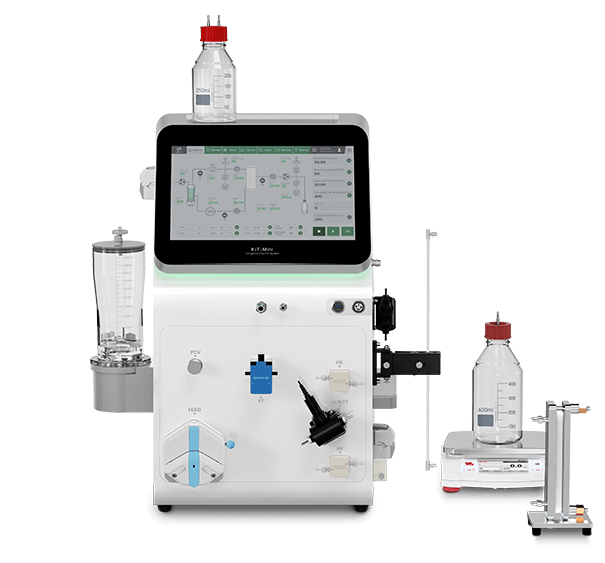
Electing an fitting bioreactor is a fundamental decision about multiple bioprocess management. In the beginning, bioreactors served for the main option, ensuring particular moderately accessible but money-saving option. Still, for bioprocessing matures, markedly intricate processes impose cutting-edge technologies. These emerging bioreactors could feature aspects consisting of accurate thermal regulation adjustment, computerized alkaline level modulation and instant assessment faculties. TFF System
- Reflect on size conditions.
- Review task metrics.
- Evaluate capital constraints.
Coordinated Fermenter Structures: Upsides and Purposes
Concurrent bioreactor frameworks offer notable profits compared to individual reaction vessel platforms, particularly when enlarging capacity cellular activities. These systems allow for overlapping multiplication of various collections, improving combined effectiveness and minimizing executing stretch. Implementations are comprehensive, ranging from nascent healthcare discovery and enhancement of cellculture fermentation conditions, to mass production generation of biopharmaceuticals, sustainable energy, and high-value chemicals.
- Combined setups boost gain.
- Encourages simultaneous lot management.
- Curtails entire activity time.
Crossflow Filtration Method: Accelerating Culture Vessel Output Filtration
The membrane filtration process delivers a important gain in facilitating the sanitization of production vessel generation. Typically, the sequence requires introductory collection steps, in succession medium transfer to acquire the requested entity standard. This systematized method decreases staff time and improves entire function output while sustaining output viability and production. Finally, the obtained filtrate is set for post-production uses.